Manual Order Work in Distribution
Manual, fragmented order processes cost distributors both time and revenue. Customers expect speed, accuracy, and proactive service—but too often, reps are stuck re-entering data, juggling disconnected channels, and reacting instead of selling.
Order automation changes the role of the counter. By centralizing communication, reducing errors, and activating customer and order data, distributors can move faster, sell proactively, and capture more orders with the same headcount.
This guide breaks down the hidden cost of manual orders in distribution, why it matters now, and how to apply it in practical, revenue-driving ways—without overhauling your entire tech stack.
The Hidden Cost of Manual Order Work
Manual work feels manageable in the moment. A text here, a handwritten note there, a follow-up you’ll get to later. But across a full day, a full branch, and a full sales team, those small tasks compound into missed orders, slow response times, and revenue that never gets captured.
- Nearly 45% of tasks employees are paid to do can be automated with current technology
- In the U.S., that represents roughly $2 trillion in annual wages
- Manual data entry carries an accepted 1% error rate—a major risk in a low-margin, high-volume business
Manual Orders Lead to Two Types of Damage
Manual processes don’t just slow work down. They create two distinct forms of damage—one you feel immediately, and one that quietly erodes revenue over time.
1. Immediate Friction (Operational Impact)
These issues surface every day at the counter, on the phone, and in text conversations. They add drag to every interaction and make even simple orders harder than they should be.
- Longer wait times while reps search for customer and order details
- Repeated questions customers have already answered
- Calling or texting the wrong contact
- Using the wrong name, company, or account context
- Constant internal handoffs and coworker interruptions
- Frustrated teams and slower service overall
Result: A poor customer experience that weakens trust and pushes buyers to faster, easier alternatives.
2. Stolen Opportunities (Revenue Impact)
This damage is less visible—but far more costly. When data is incomplete or scattered, teams lose the ability to sell proactively.
- Missed upsell and cross-sell opportunities
- No clear way to identify or re-engage dormant customers
- Marketing campaigns that underperform due to poor targeting
- Messaging sent to the wrong persona (AP instead of the buyer)
- Little to no visibility into buying patterns or preferences
- Fewer proactive touches, leading to fewer orders
Result: Missed opportunities turn directly into missed sales—often without anyone realizing what was lost.
Why Order Automation Matters Now
Margins are tightening. Customer expectations are rising. And competitors are faster than ever.
Slow responses, misplaced faxes, manual re-keying, and disconnected systems aren’t just frustrating—they’re costing orders. When customers don’t hear back quickly or receive inaccurate information, they move on.
Distributors that win today don’t treat the counter as a service desk. They treat it as a proactive sales channel. Order automation makes that shift possible by giving reps the speed, visibility, and structure to capture every opportunity.
How to Apply Order Automation without Re-Vamping Your Whole Tech Stack
Order automation isn’t about replacing reps or adding complexity. It’s about removing friction from the order lifecycle so reps can focus on selling.
At its core, order automation:
- Centralizes order-related communication
- Standardizes repeatable workflows
- Reduces manual data entry and errors
- Surfaces the right information at the right time
Order Automation drives tangible value that shows up in everyday tasks. Reps spend less time managing process and more time actively driving orders. Conversations stay on track, handoffs are cleaner, and every customer gets exactly the message they need. The result is a counter that runs faster, more consistently, and with far less reliance on tribal knowledge.
At its core, Order Automation tackles three critical jobs: removing friction from everyday workflows, creating capacity for proactive selling, and turning every customer interaction into a potential completed order. By centralizing communication, automating quotes, and providing clear next steps for reps, OA ensures that no conversation falls through the cracks—and that every opportunity is captured, acted on, and closed efficiently. These capabilities don’t just streamline operations; they directly drive revenue, empower reps to sell smarter, and transform the counter into a predictable engine for growth.
1. Move Orders Faster
Speed wins orders. Customers reward distributors who respond first and respond accurately.
What to Fix
- Customers unsure if their request was received
- Quotes that take too long to turn around
- Status updates that require manual follow-up
How Automation Helps
- Auto-acknowledgments confirm receipt instantly
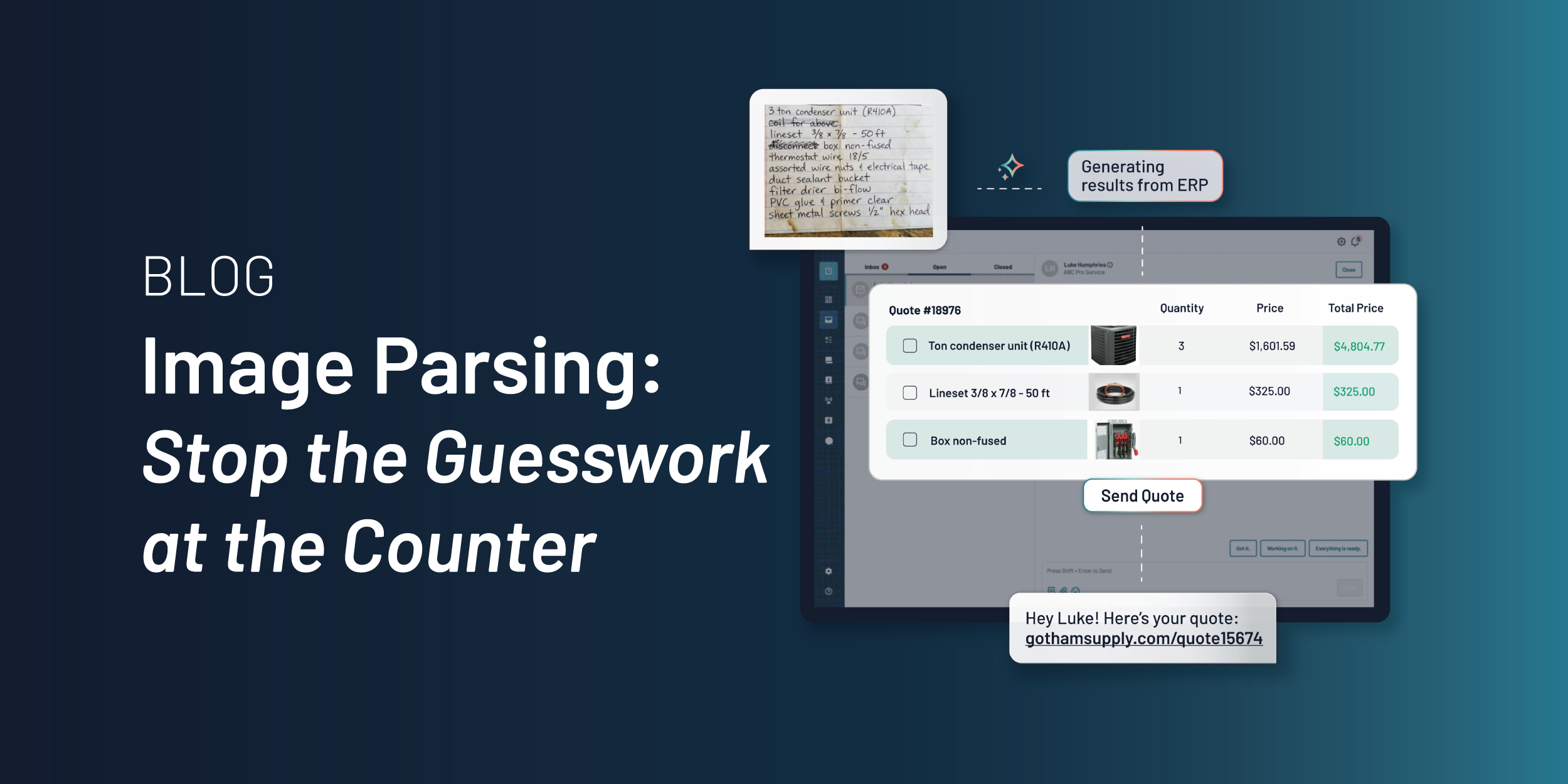
- AI-powered quoting tools speed up responses
- ERP integrations provide real-time order status
Outcome: Faster responses, fewer dropped conversations, and more orders captured before competitors respond.
2: Cut Errors and Protect Revenue
Errors erode trust—and trust is hard to win back.
What to Fix
- Orders keyed multiple times across systems
- Inconsistent customer or product information
- Missing context during handoffs
How Automation Helps
- Syncs ERP data with customer conversations
- Logs quotes, orders, and updates in a single record
- Enforces structured workflows for accuracy
Outcome: Cleaner orders, fewer callbacks, and consistent service customers can rely on.
3. Turn Activity Into Order Opportunities
Reps shouldn’t wait for the phone to ring.
Order automation turns existing activity into sales opportunities.
What to Fix
- Quotes that go cold
- Dormant customers no one has time to follow up with
- Reorder opportunities missed due to busy counters
How Automation Helps
- Automated quote reminders
- Targeted re-engagement campaigns
- Follow-ups triggered by timing or behavior
Outcome: Higher quote-to-order conversion, more reorders, and consistent revenue with less manual effort.
From Faster Orders to Proactive Revenue
Order automation doesn’t just make the counter faster. It fundamentally changes how the counter operates.
When reps aren’t buried in re-keying orders, tracking down context, or chasing updates, something important happens: capacity is created. Not “free time,” but usable selling time.
This is where most distributors stall. They automate the work—but don’t change the behavior.
The distributors that grow are the ones who turn that recovered capacity into proactive, repeatable sales motion. Order automation provides the foundation. Proactive selling is how you monetize it.
What Proactive Selling Looks Like at the Counter
Proactive selling doesn’t require new headcount or complex campaigns. It starts with simple, repeatable actions built into daily counter work.
1. Reactivating Dormant Customers
The problem:
Dormant accounts don’t disappear—they’re just ignored because no one has time to follow up.
What automation enables:
- Visibility into inactive customers
- One-click outreach via text or email
- Templates that make re-engagement fast and consistent
Example actions:
- “Just checking in—need help with a reorder?”
- Seasonal reminders tied to past purchases
- Helpful product availability alerts
Outcome:
Dormant customers re-enter the pipeline without reps needing to “remember” who to contact.
2. Turning Quotes and Activity into Orders
The problem:
Quotes go cold because follow-up depends on memory and personal habits.
What automation enables:
- Automated quote reminders
- Clear ownership and next steps
- Shared visibility across shifts and team members
Example actions:
- Timed follow-ups after quotes are sent
- Alerts when a customer goes quiet
- Easy handoffs when reps are unavailable
Outcome:
Higher quote-to-order conversion and fewer lost opportunities.
3. Driving Reorders Without Waiting for the Phone to Ring
The problem:
Reorder opportunities exist—but counters are too busy reacting to inbound demand.
What automation enables:
- Buying history and patterns surfaced automatically
- Triggers based on time, usage, or seasonality
- Consistent outreach across reps and locations
Example actions:
- “You typically reorder this around now—want me to get it started?”
- Stock availability or substitution alerts
- Light-touch check-ins that feel helpful, not salesy
Outcome:
More predictable revenue driven by proactive touches, not luck.
Proactivity can only happen when reps have the capacity to do it. Recovered time freed up by Order Automation is what enables follow-ups, reactivation, and reorder outreach to actually happen.
The Hidden Cost You Can’t Afford to Ignore
Manual orders don’t just create inefficiency—they quietly limit how much revenue a distributor can generate. Every re-keyed order, delayed quote, and missed follow-up steals time from selling and turns the counter into a reactive service desk instead of a growth engine.
Order automation changes that equation. By centralizing conversations, reducing errors, and activating customer and order data, distributors recover real selling capacity at the counter. That capacity is what enables faster responses, consistent follow-up, and your teams ability to proactively drive orders.
The distributors that win aren’t adding headcount or ripping out systems. They’re removing friction from how orders flow, then using the time they get back to sell more intentionally. The hidden cost of manual orders is lost growth. Order automation is how distributors get it back.