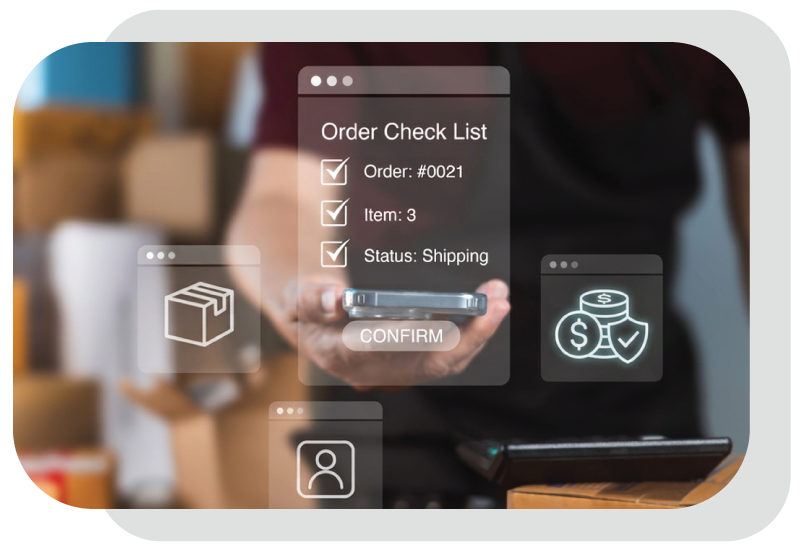
Order-to-cash automation applies technology to the full cycle a distributor runs from the moment an order is placed to the moment payment is collected, reducing the manual steps in between.
The Cycle Step by Step
The order-to-cash cycle typically runs through order entry, order acknowledgment, fulfillment, invoicing, and payment collection. Each step depends on the accuracy of the one before it: an error at order entry carries through to a wrong invoice, and a wrong invoice slows down payment.
Where Distributors Lose Time, Tied to Each Stage
At order entry, time gets lost interpreting ambiguous customer requests and manually keying details into the ERP. At acknowledgment, time gets lost when a rep has to manually review and confirm every order rather than that step happening consistently on its own. At fulfillment, mismatches from earlier in the cycle surface as wrong-item shipments or returns. At invoicing and collection, errors carried from earlier steps turn into disputes that delay payment further.
How AI Agents Shorten the Cycle
AI agents address the earliest points in this cycle, where unstructured, ambiguous input first enters the system. Interpreting a customer's request accurately at order entry reduces the errors that would otherwise surface later, at fulfillment or invoicing, as a mismatch or a dispute. Agents don't touch the financial steps of the cycle directly; their effect is upstream, in how cleanly an order starts.
Metrics to Track
Order cycle time, from order placed to payment collected, is the top-line number. Underneath it, order accuracy rate and days sales outstanding show where in the cycle time is actually being lost.